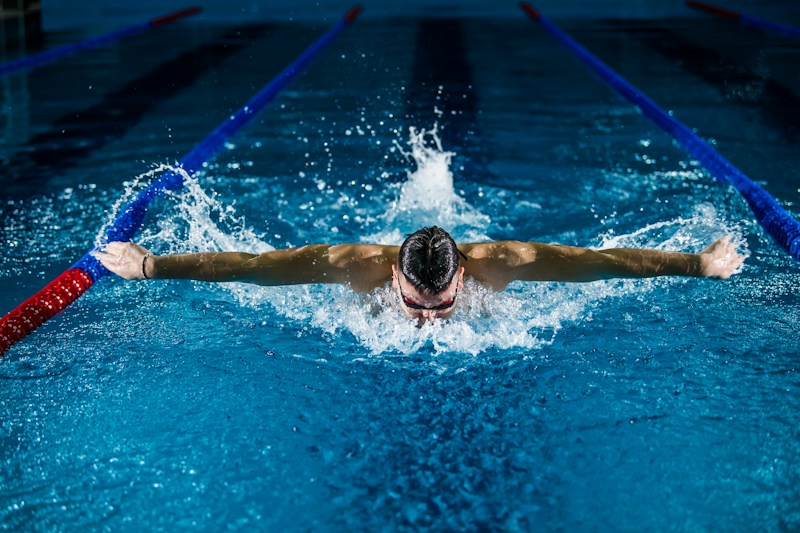
For competitive swimmers and swimwear brands, fabric longevity in chlorinated water is non-negotiable. A single elite swimmer can spend 20+ hours per week in the pool, and standard nylon-spandex blends often begin degrading after just 60–80 hours of exposure. Understanding the polymer science behind chlorine resistance is essential for manufacturers, club managers, and brand owners who want to deliver durable, high-performance products.
The Chemistry of Chlorine Degradation
Chlorine is added to swimming pools as a disinfectant, but it acts as a powerful oxidising agent on textile fibers. When chlorine molecules contact conventional nylon 6 or nylon 6,6, they attack the amide linkages in the polymer chain. This causes chain scission—breaking the long molecular strands into shorter segments—which manifests as loss of elasticity, fading colour, fabric thinning, and eventual structural failure. The process accelerates with higher chlorine concentrations, warmer water temperatures, and prolonged UV exposure.
PBT vs Nylon: A Molecular Advantage
Polybutylene Terephthalate (PBT) offers a fundamentally different chemical structure compared to nylon. PBT belongs to the polyester family, with an aromatic ring in its backbone that provides exceptional resistance to oxidative attack. While standard nylon swimwear may last only 3–6 months of regular training use, PBT-based fabrics can withstand 200+ hours of chlorinated water exposure while maintaining 90% of their original tensile strength. This durability translates directly into cost savings for swim teams and higher perceived value for retail brands.
Key comparison points between PBT and nylon for competitive swimwear:
- Chlorine resistance: PBT retains elasticity 3–5 times longer than nylon 6,6 under identical pool conditions.
- Colour retention: PBT’s molecular structure resists dye migration and fading, keeping team colours vibrant season after season.
- Drying speed: PBT absorbs less water (0.4% vs 8–10% for nylon), enabling faster drying between training sessions.
- Shape memory: After 200+ hours of exposure, PBT recovers 95% of its original dimensions; nylon typically recovers only 60–70%.
Benefits for Competitive Swimwear Brands
For B2B buyers sourcing team swimwear or competition-grade suits, PBT-based fabrics reduce warranty claims and increase customer satisfaction. Swimmers notice the difference within the first month—the fabric does not bag out at the hips or shoulders, and the leg openings remain snug without being restrictive. Brands that spec PBT communicate a premium positioning and a commitment to performance that resonates with serious athletes and club administrators alike.
SABOLAY’s Fabric Options
SABOLAY offers a dedicated range of chlorine-resistant fabric routes designed for different market segments:
- PBT 100% — Maximum chlorine resistance for elite competition swimwear and training suits. Recommended for brands targeting professional swimmers and high-performance clubs.
- Polyester/Spandex blends (82/18) — An excellent mid-range option that offers strong chlorine resistance at a lower price point than full PBT. Ideal for learn-to-swim programs and recreational team wear.
- PBT/Nylon hybrid — A proprietary blend that balances the soft hand feel of nylon with the durability of PBT. Suitable for fashion-forward competition styles where aesthetics and performance carry equal weight.
All SABOLAY chlorine-resistant fabrics are tested to ISO 105-E03 colour fastness standards and meet OEKO-TEX Class 1 certification, ensuring they are safe for direct and prolonged skin contact even in elevated chlorine environments.
Care Considerations to Maximise Lifespan
Even the best chlorine-resistant fabric benefits from proper care. Advise your customers to rinse swimwear immediately after use in cool fresh water, avoid wringing, and dry away from direct sunlight. With appropriate care, SABOLAY PBT suits have been documented to last over 12 months of daily training—a benchmark that standard nylon blends simply cannot match.